Maximizing Efficiency with High Horsepower Ribbon Mixers
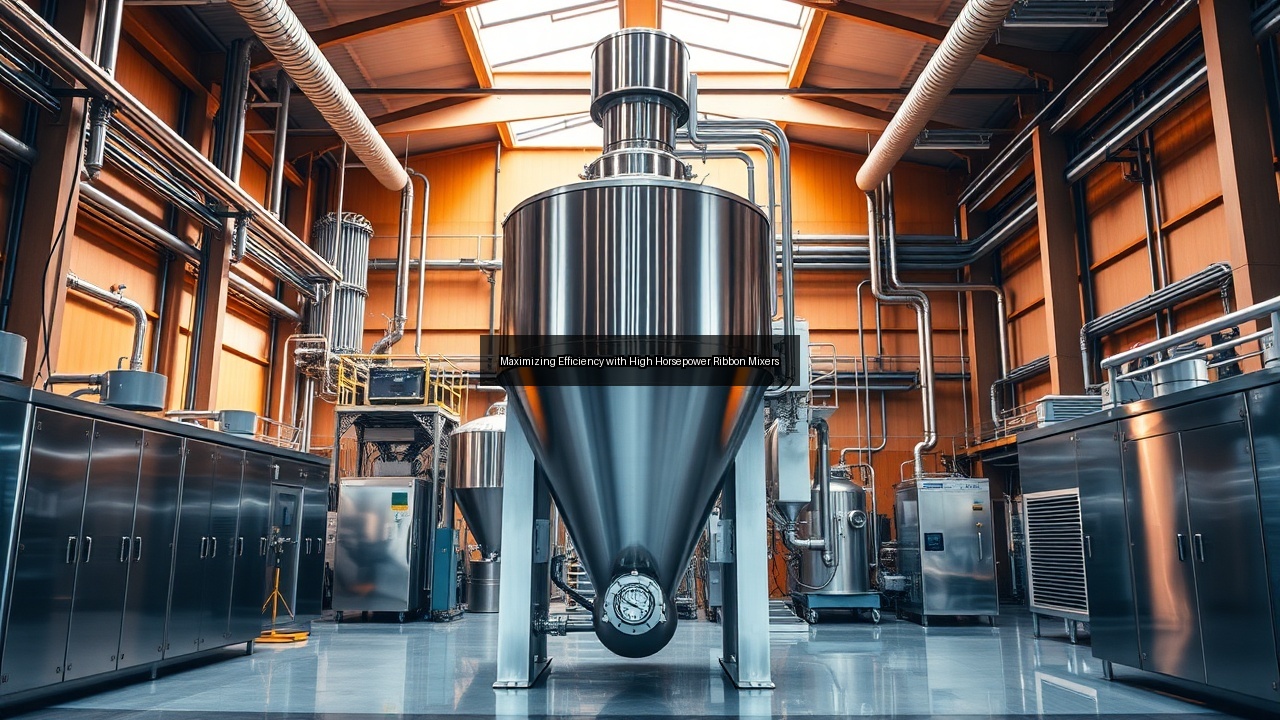
Understanding High Horsepower Ribbon Mixers
What is a Ribbon Screw Blender?
A ribbon screw blender, commonly referred to as a ribbon mixer, is an industrial mixing device designed for blending bulk materials with high blender screw efficiency. This equipment utilizes a non-turbulent blending action that combines ingredients through the use of a unique ribbon-shaped agitator. The ribbons, typically made of robust materials like 304 stainless steel, rotate around a horizontal trough, enabling thorough mixing of powders and granules without breaking down or damaging delicate components. The design allows for a continuous flow of material, making it ideal for large-scale operations. The ribbon blenders can handle a variety of materials, from dry powders to pastes, catering to diverse industrial needs. Their versatility and effectiveness in producing uniform mixtures make them a favorite among manufacturers in various sectors.
Benefits of High Horsepower in Industrial Mixing
High horsepower in ribbon mixers plays a crucial role in enhancing their performance. The increased power allows these mixers to handle larger batches and denser materials while maintaining consistent mixing quality. High-horsepower mixers can achieve optimal speeds, measured in RPM, which directly influences the efficiency of the blending process. By generating enough force, these mixers can break apart clumps and ensure even distribution of components, which is particularly beneficial when mixing powders of varying particle sizes. Moreover, the capability to adjust the horsepower settings enables operators to fine-tune the mixer’s performance for specific applications, ensuring that the end product meets stringent quality standards. This adaptability makes high horsepower ribbon mixers essential for industries that demand precision and reliability in their mixing processes.
Key Components of Ribbon Mixers
Understanding the key components of ribbon mixers is essential for optimizing their performance. The primary elements include the trough, the ribbon screws, and the drive mechanism. The trough, often made from durable materials like 304 stainless steel, provides the structure where materials are mixed. Its design ensures that the contents remain contained while allowing for easy loading and unloading. The ribbon screws, which can vary in pitch and diameter, are designed to lift and fold materials, promoting effective mixing and preventing dead zones. Finally, the drive mechanism, usually powered by a high-horsepower motor, powers the rotation of the screws, ensuring consistent speed and reliability. Additional components like rotary valves can be integrated into the system to facilitate the controlled discharge of the mixed materials. Together, these components create an efficient blending system capable of meeting the demands of various industries.
Applications of Ribbon Mixers in Various Industries
Use of Ribbon Blenders in Powder Processing
Ribbon blenders find extensive applications in powder processing across multiple industries. Their ability to mix dry powders uniformly makes them indispensable in sectors like pharmaceuticals, chemicals, and food manufacturing. For instance, in the pharmaceutical industry, consistency in blending is critical for ensuring accurate dosages. Ribbon mixers facilitate this by providing a gentle yet thorough mixing action that preserves the integrity of the active ingredients. In the food industry, these mixers efficiently blend spices, flour, sugar, and other dry ingredients, ensuring that the final products meet both quality and safety standards. The use of a ribbon screw blender in powder processing not only enhances product quality but also improves production efficiency, allowing manufacturers to meet higher demands with consistent results.
Industrial Mixing for Food and Pharmaceutical Applications
The food and pharmaceutical industries require stringent mixing standards to ensure the safety and efficacy of their products. Ribbon mixers cater to these needs by providing a reliable solution for uniform blending of both powders and pastes. In the food industry, ribbon blenders are commonly used to mix ingredients for snacks, baked goods, and sauces, where consistency is vital for taste and texture. The use of 304 stainless steel in construction ensures that the mixers are easy to clean and maintain, adhering to hygiene standards. In pharmaceutical manufacturing, ribbon mixers handle active pharmaceutical ingredients (APIs) and excipients, ensuring precise blending for effective formulations. The capability to control mixing times and speeds enables manufacturers to achieve the desired homogeneity, critical for both product quality and regulatory compliance. Overall, ribbon mixers play a vital role in these industries, enhancing operational efficiency and product quality.
Impact of Construction Materials: 304 Stainless Steel vs. Others
The choice of construction materials significantly impacts the performance and longevity of ribbon mixers. 304 stainless steel stands out as a preferred option due to its excellent corrosion resistance and durability. In industries where hygiene is paramount, such as food and pharmaceuticals, 304 stainless steel ensures that the mixers remain free from contaminants, making them easy to clean and maintain. Other materials, while potentially less expensive, may not offer the same level of resistance to harsh cleaning agents or exposure to corrosive substances. Choosing a less durable material can lead to increased maintenance costs and potential contamination risks. Thus, investing in high-quality construction materials like 304 stainless steel for ribbon mixers not only enhances their performance but also contributes to the overall efficiency and safety of industrial mixing processes.
Optimizing Performance of Ribbon Mixers
Adjusting RPM for Maximum Efficiency
Optimizing the RPM of ribbon mixers is crucial for achieving maximum efficiency in the blending process. The speed at which the ribbon screws rotate directly influences the mixing dynamics. Adjusting the RPM allows operators to control the intensity and duration of mixing, ensuring that materials are blended thoroughly without over-mixing, which can lead to degradation of sensitive components. For instance, higher RPMs can be effective for denser materials that require more force to break apart, while lower RPMs may be more suitable for fragile powders that need gentle handling. Understanding the specific requirements of the materials being mixed helps in selecting the optimal RPM settings. Regular monitoring of the mixing process and adjusting the RPM accordingly can lead to improved product consistency and reduced production time.
Role of Rotary Valves in Material Handling
Rotary valves play a significant role in the efficient handling of materials in ribbon mixers. These valves serve as a critical interface between the mixer and the downstream processing equipment, ensuring a smooth and controlled discharge of mixed materials. By utilizing rotary valves, operators can manage the flow of powders and granules with precision, minimizing the risk of contamination and ensuring that the blending process remains uninterrupted. The design of rotary valves allows for the handling of a variety of materials, including those with varying particle sizes and densities. This adaptability is crucial in industrial settings where different formulations may require quick transitions between batches. Incorporating rotary valves into the system enhances overall efficiency and supports the production of high-quality end products.
Maintaining Quality with Proper Trough Design
The design of the trough in ribbon mixers significantly influences the quality of the mixing process. A well-designed trough ensures that materials flow smoothly, allowing for optimal interaction between the ribbon screws and the contents. The shape and depth of the trough should facilitate efficient mixing while preventing material build-up or dead zones. Many modern ribbon mixers feature a tapered or curved design that enhances the movement of materials, promoting a more homogeneous blend. Additionally, integrating features such as removable troughs can simplify cleaning and maintenance, ensuring that the mixer remains compliant with hygiene standards. Attention to trough design not only affects the quality of the mix but also contributes to the longevity and effectiveness of the ribbon mixer in various industrial applications.
See Also
- Exploring the Advantages of Stainless Steel in Ribbon Blenders
- From Construction to Food Processing: Versatile Uses of Ribbon Screw Blenders
- Customizing Your Ribbon Screw Blender for Unique Applications
- Real-World Applications of Ribbon Screw Blenders in Various Industries
- Comparing Ribbon Screw Blenders and Traditional Mixers